

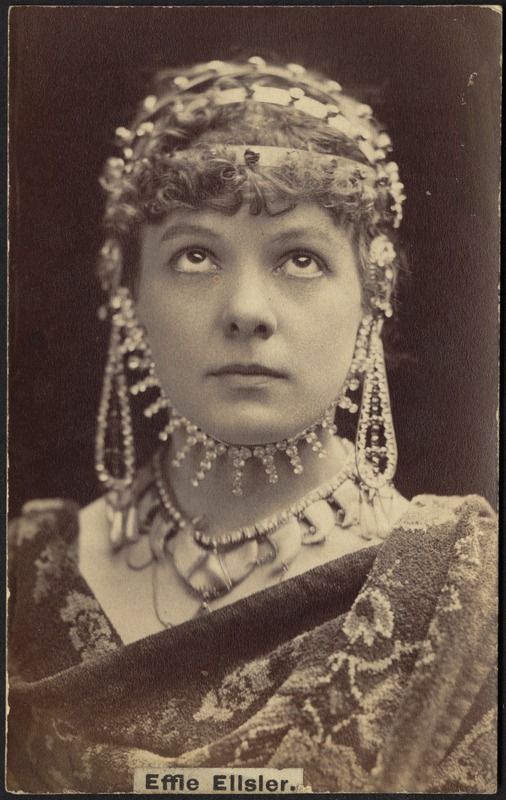
1892
Ephemeral Mysteries 4: An 1892 Artifact Recalls Effie Ellsler, Broadway sensation, and her performance in Elyria, Ohio
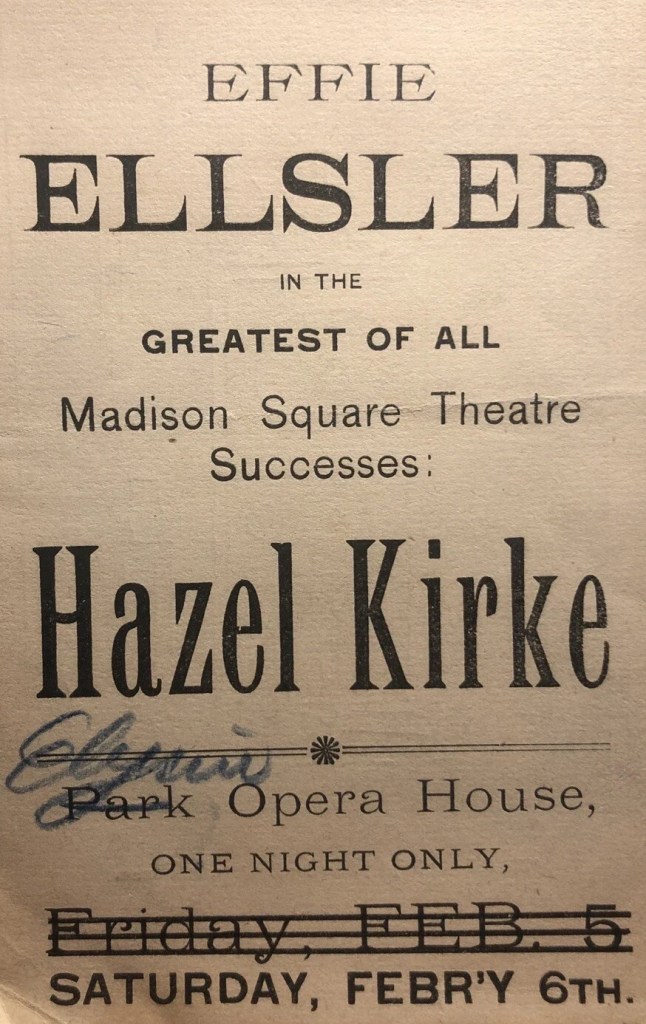
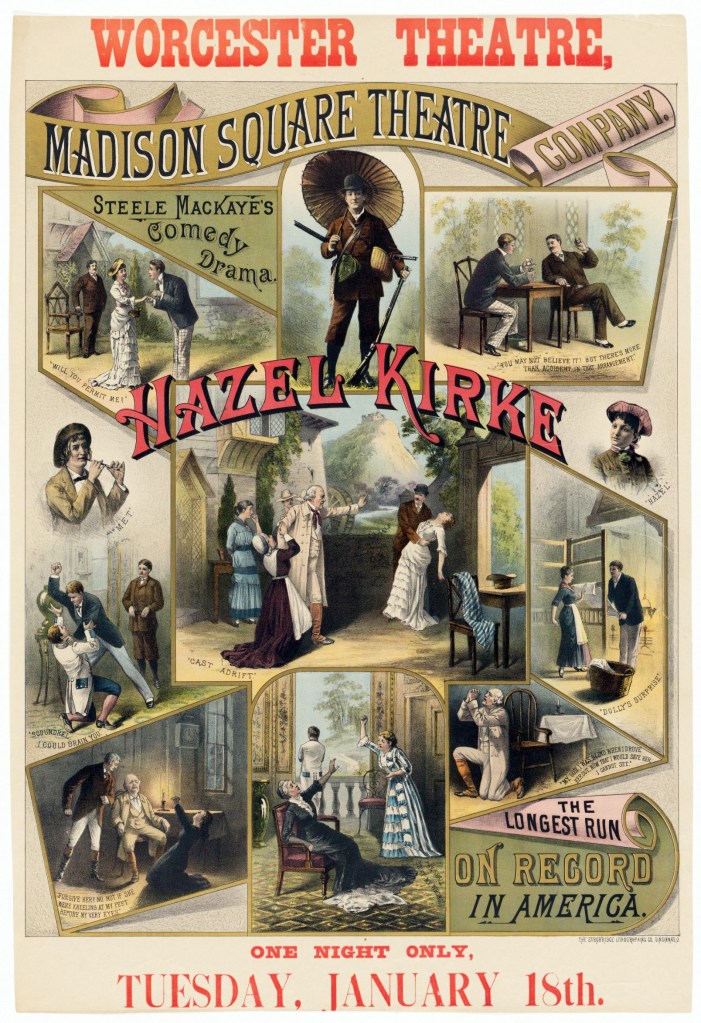
Here we have just another small scrap of ephemera, a 19th-century theatre handbill advertising actress Effie Ellsler in Hazel Kirke, one of the most successful American plays of its era, on its much-anticipated revival tour. But, is there a mystery here? Always! Someone altered this playbill by hand, but why?
The original printing announced Ellsler’s appearance at the “Park Opera House” for one night only on Friday, February 5 (which I would later discover was in 1892). At one point, those details were crossed out. In blue pencil, someone wrote “Elyria” above the word “Opera House.” Below the original text, a correction was typed:
Elyria Opera House – Saturday, February 6.
Why the change? And, ultimately…
What can a few handwritten corrections tell us about theatrical practices of the 19th century more broadly?
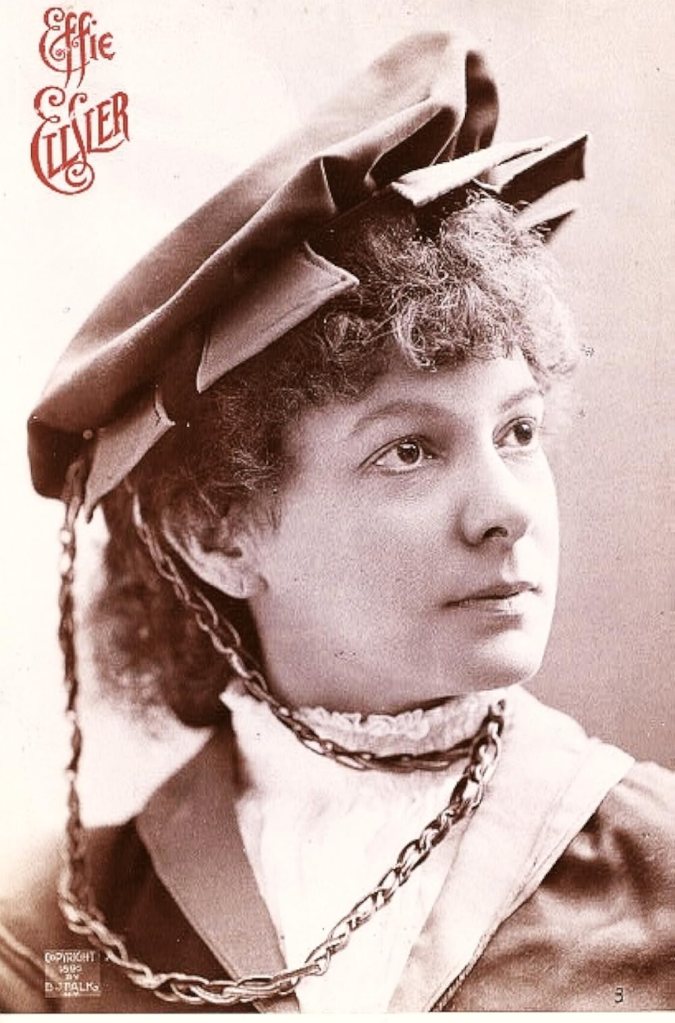
The star of the show was Effie Ellsler, one of the most celebrated actresses of the late 1800s. She had achieved the longest run on Broadway up until that time, with 480 performances of Hazel Kirke, which opened in 1880. Over a decade later, well after the first run of the show closed, she would take it on tour throughout the country; Ohio’s Salem Daily News noted that she “ has portrayed the beautiful character of Hazel Kirke for nearly two thousand consecutive nights.” Other newspapers in Ohio reported enormous crowds wherever she appeared. The Daily News declared that no event in their town’s theatrical history had generated greater anticipation than Ellsler’s forthcoming engagement, which continued drawing “phenomenal business” throughout the state. At the same time, lesser stars struggled to fill seats.
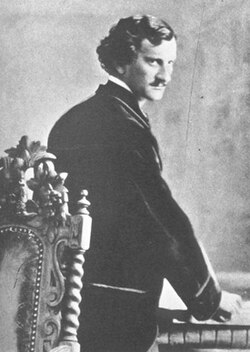
The play itself became one of the greatest commercial successes of 19th-century American theatre. Hazel Kirke helped to establish its playwright, Steele MacKaye, (pictured here) as one of the era’s most influential theatrical innovators (he would even invent the foldable theater seat and much more).
It also helped to establish Ellsler, and it would remain associated with Ellsler throughout her career. Audiences flocked to see her interpretation of the title role, and many members of her touring company had participated in the play’s original Madison Square Theatre production in New York.
That is all mostly forgotten, but well-documented Broadway history. But the mystery of this artifact is located far from Broadway: in Elyria, Ohio.
My research into local newspapers revealed that the crossed-out “Park” was likely not the name of an opera house. Instead, it refers to W. Henry Park, a longtime Elyria pharmacist who served as manager of the Elyria Opera House during this time.
Park is a fascinating local figure. Long before entering the local drugstore business, he served as a musician with an Ohio regiment during the Civil War. Newspaper accounts and veterans’ records describe Park as a man known by the nickname “Quinine,” beloved by his fellow soldiers and remembered as “the Prince of Storytellers” (in fact, his fascinating letters home from the front lines were published in his hometown paper). After the war, he returned to Elyria, built a successful pharmacy business, and became involved in local politics. Among his responsibilities was managing the town’s opera house, located on the upper floor of Elyria’s Town Hall.
With all of this in mind, I could finally bring the correction on the handbill into focus.
The original printer may have referred to the venue informally as “Park Opera House” because Park managed the building, and it was likely known by that name locally. Nevertheless, whatever the exact explanation, the surviving handbill preserves evidence of the practical realities of 19th-century theatre: with so many touring performers travelling by rail, schedules easily shift and need adjustment; also, correcting outdated or incorrect information was much more difficult for managers than in today’s digital and connected world.
The newspapers have preserved that Ellsler’s company made it to Elyria during a successful Ohio tour. Audiences elsewhere praised her emotional performance as Hazel and applauded the veteran actor Couldock, then seventy-six years old, for bringing vigor to his role. Even over a decade after it premiered, at the time of Ellsler’s Ohio Hazel Kirke revival tour, the show was popular enough that plans were underway to mount an even more elaborate revival production the following season, using scenery based on the original Madison Square Theatre designs.
Today, the handbill can be interpreted as a souvenir of a famous actress performing in a consequential, celebrated Broadway touring success in America’s heartland. It preserves a fleeting moment when national theatrical culture intersected with local community life.
But, ultimately, the handwritten correction reminds us that theatre history is about way more than stars and playwrights.
Theatre history is created by local managers like W Henry Park, the town halls like the Elyria Opera House, and a host of community members, printers, newspaper editors, and audience members whose names almost never appear in conventional histories.
There are lost histories everywhere we look, and even a few crossed-out words can teach us instructive bits about the past. In the future, we’ll return to Steele MacKaye, whose work with technical theatre still impacts the art and the industry today. Until next time, please share Community Arts Uncovered with your friends, colleagues, and fellow historians or theatre makers.
A note on sourcing:
This mystery began with the corrected handbill from the Wolfgang Collection. Newspaper coverage from Salem, Ohio, revealed the immense popularity of Effie Ellsler’s tour and confirmed her long association with Hazel Kirke. Local records from Elyria identified W. Henry Park not as the owner of a separate opera house, but as the manager of the Elyria Opera House, helping explain the handwritten correction preserved on the artifact. Many entries and articles from the following sources were utilized to write this post, including:
- The Toledo Evening Bee (Toledo, OH)
- The Salem Daily News (Salem, OH)
- https://www.cityofelyria.org/history-of-elyria


Leave a Reply