The life, theatre, and queer history of Charlie Edwards (1880–1926), a forgotten pioneer of community performance on the Great Plains.
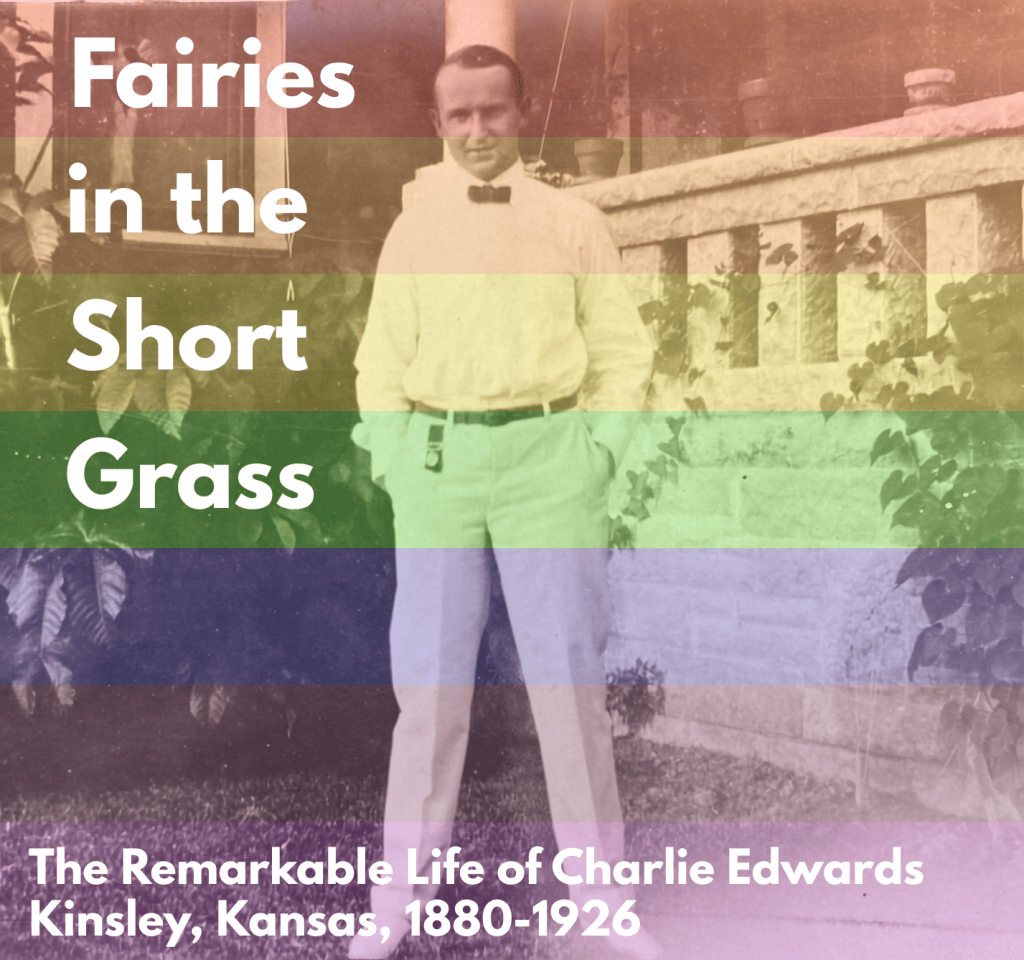
This project sits at the intersection of community theatre, rural cultural history, and queer history. Presented as an open-access, public-facing history, it seeks to recover the forgotten stories, overlooked people, and local artistic movements that helped shape American cultural life.
Who Was Charlie Edwards?
Charlie Edwards (1880–1926) was a community theatre pioneer, director, actor, poet, and newspaper editor from Kinsley, Kansas.
Although he worked professionally as an actor in Kansas City, his greatest impact came through the massive community pageants and theatrical productions he directed across western Kansas and Oklahoma. His largest Shakespeare production featured more than 1,000 performers, and he became an important contributor to the Midwest’s role in the national Little Theatre Movement. Yet despite his remarkable accomplishments, Edwards received little recognition beyond the region he served. Following his death, his story and many of his contributions to American theatre largely disappeared from public memory.
Community Arts Uncovered begins with a serialized biography researched and written by William Wolfgang, PhD, that traces Charlie’s life in Kinsley, his artistic ambitions, his loves near and far, and his travels across the United States.

A Cultural History
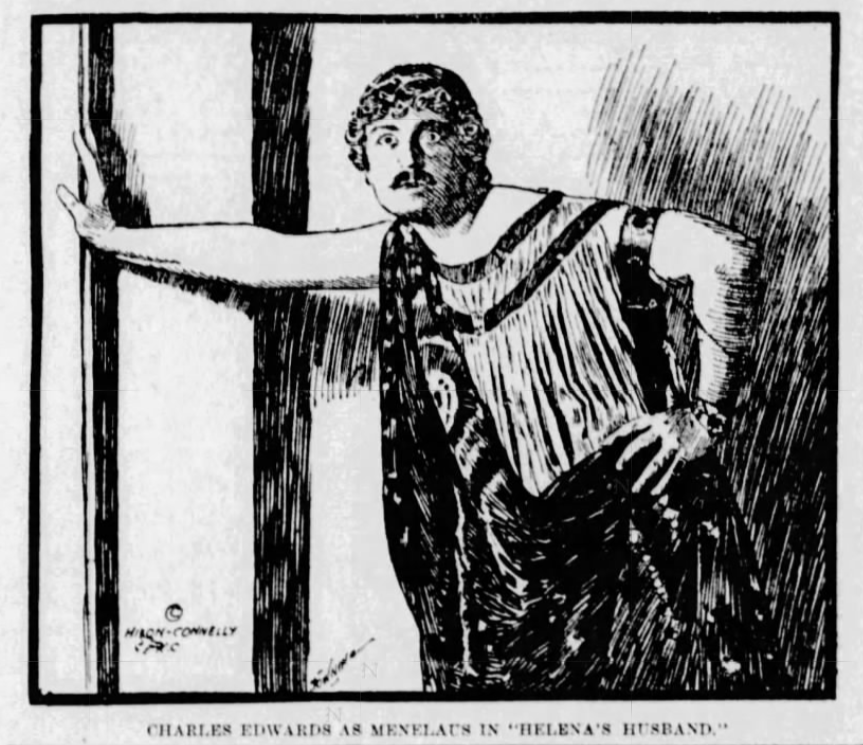
The Charlie Edwards Project helps fill significant gaps in American theatre and cultural history. It contributes to ongoing conversations about early twentieth-century Shakespeare performance, community-based theatre, and the Little Theatre Movement while revealing the extraordinary scale of artistic activity that flourished far from New York and other major cultural centers.
The project uncovers both Charlie’s personal dramas and the collective achievements he inspired. His journey extended well beyond western Kansas, leading to dinners with members of a presidential cabinet, encounters on the periphery of the famed Algonquin Round Table, and participation in one of the largest Shakespeare-inspired productions ever staged in New York City.
A Queer History
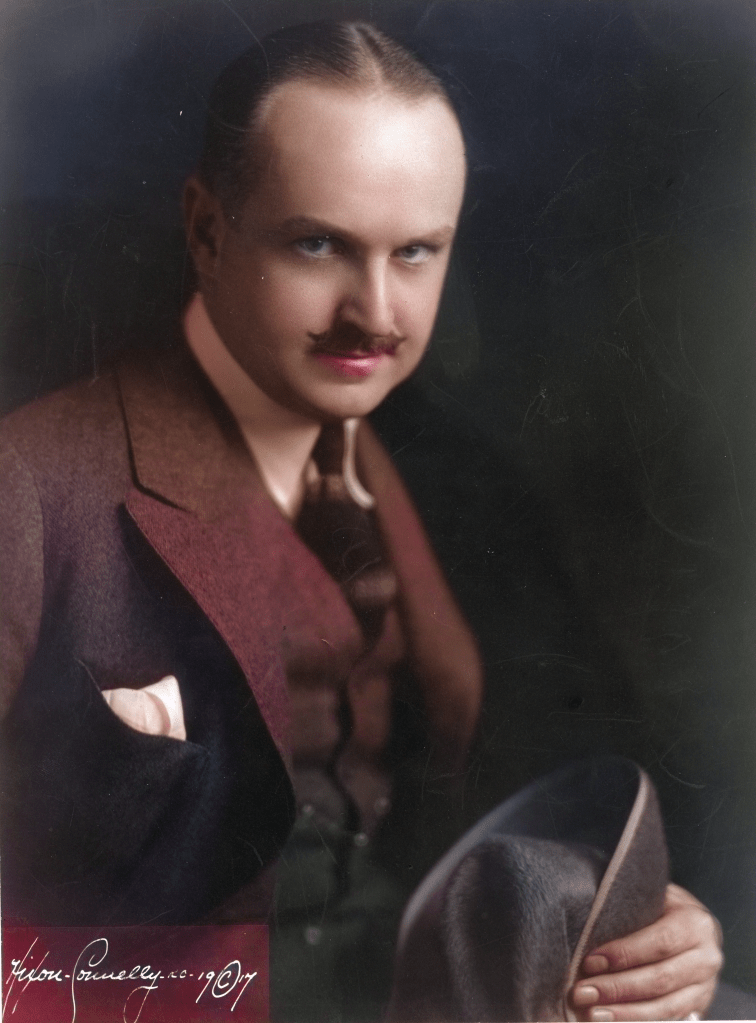
Recovering queer lives from local and community history reminds us that LGBTQ people have always been part of America’s cultural landscape. Historical narratives often focus on major cities, prominent activists, and nationally known figures, overlooking the countless individuals who built communities, created art, formed relationships, and shaped civic life in small towns and rural regions. By recovering stories like Charlie Edwards’s, we gain a fuller and more accurate understanding of the American past.
These recovered lives remind us that creativity and community flourished even in places where historians and storytellers overlook. The project also examines Charlie’s own writings and perspectives on sexuality in early 20th-century America, offering a rare glimpse into the personal reflections of a queer theatre artist working on the nation’s cultural frontier. (Photo by Hixon-Connelly Photography, 1917; Courtesy of the Edwards County Historical Society).
Fairies in the Short Grass: The Festival Begins, 1912
“Fairies in the Short Grass. It sounds a trifle improbable, perhaps, but it’s true nonetheless.” – The Chanute Daily Tribune, 6th of June, 1912
Across three dazzling nights in June 1912, fairies collectively captured the dreams of thousands in the remote, erstwhile frontier town of Kinsley, Kansas.
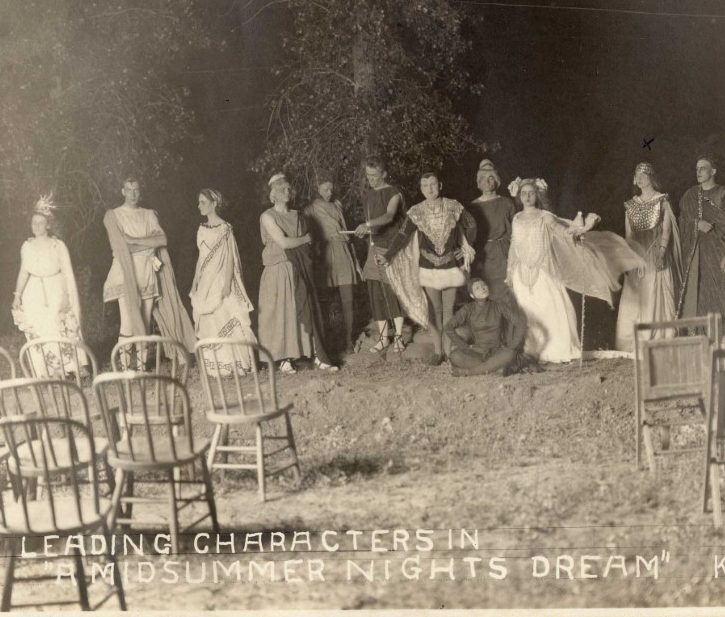
In this community of fifteen hundred, one hundred local actors representing characters from a four-hundred-year-old story commanded a grassy stage. Flanked by cottonwood trees adorned with green-shaded electric lights, the performers conjured a fantastical mysticism. The crowd of family, friends, and travelers before them internalized the ephemerality of this moment and seared the images and the feelings into memory. This transcendent experience would live with many onlookers and participants for the rest of their days. For some, it would define their lives; for others, they would take its lessons and shape the cultural history of the United States.
The two men responsible for the fleeting moment of pixies and sprites, thirty-two-year-old Charlie Edwards and twenty-six-year-old Gilmor Brown, shared a deep bond.
They grew up in rural late 19th-century America, Charlie in western Kansas and Gilmor in North Dakota, and failed to live up to the expectations of what constituted boyhood and manhood. Instead, they both longed for expression in a world of grit, hardship, and cold financial calculus. These artistic dreamers identified more with the fairies in their story than the couples lost in the enchanted woods. While feeling alone and excluded from their peers, they retreated to worlds of their own creation. When the time came, as budding thespians, the two sons of the prairie enrolled in schools of oratory and expression. Later, Charlie and Gilmor pursued nascent careers in theatre and the arts, stumbling and struggling through the unremarkable and fameless. After growing into young adulthood, they would suppress their now apparent sexualities to differing degrees, which could not be spoken aloud. Even the thought of it was ruinous.
When Charlie and Gilmor (pictured right) met four years before the fairies assembled in Kinsley, they immediately must have identified these commonalities. They shared many mutual loves. Most prominent among these was the work of America’s most popular playwright, the patron saint of the English language, William Shakespeare.
But the two men diverged in their financial situations. Charlie, the brown-haired, blue-eyed son of prominent families with Colonial roots from New York and Philadelphia, was born into luxury and wealth. Therefore, the pursuit of money would never concern him. Meanwhile, Gilmor’s situation necessitated constant hard work and even hardship. As the child of a first-generation American braving the rural North Dakota prairie expanse, he developed a work ethic that would pay significant dividends, and he came to fulfill his “dream on a dime.”
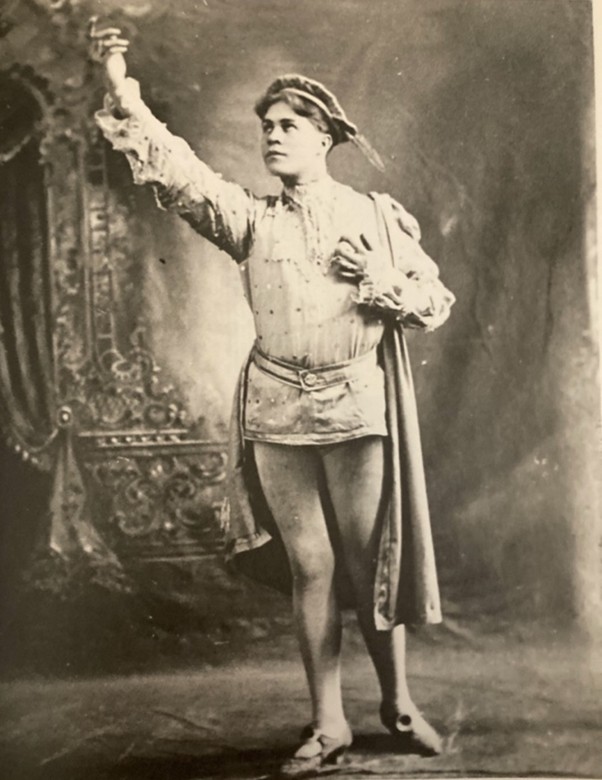
Neither Charlie nor Gilmor would live to see a day when they, as gay men, could publicly recognize their sexuality, free from coded language and euphemisms.
For an unknowable number of individuals, privately doing so was difficult enough. Advances throughout their lifetimes were minuscule. Hence, telling stories of gay people from his era presents an obvious challenge to the researcher and writer. In the absence of a personal diary, which would have been unreasonably risky to confess queer liaisons in writing, there are few methods to confirm a person’s sexuality nearly a century after death.
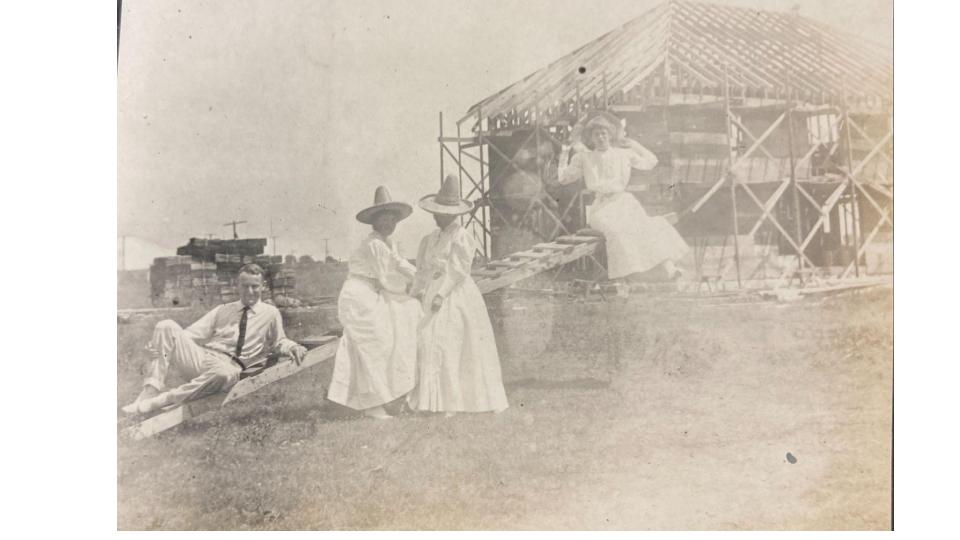
In Charlie’s case (Charlie is pictured in the image to the left, far left), however, those sources do exist. While his poetry and essays allude to his struggles with his queer identity, his contemporaries and the current sources confirm it. Yet, for Charlie’s beloved town that had withstood fires, train robberies, and plagues, the reality was that being anything less than a prescribed view of masculine strength was unwelcome. Required behaviors for the two genders were omnipresent.
In a production Charlie viewed as an eight-year-old, one that he would attempt to recreate years later, the playwright wrote, “my pap is so nice that I guess he was a little girl when he was a little boy.” Girls were nice, and boys were tough; this sentiment was foundationally instilled in all children during the late 19th century. Nevertheless, Charlie silently pushed back against these omnipresent gender norms and sought same-sex relationships, euphemistically labeled by many as an “unspeakable act.” His published work, which I will explore in this blog, freely signaled his rejection of gender normativity with frequent and not entirely inconspicuous references to “fairies.’ Throughout his life, he would use Shakespeare’s embrace of these same fantastical beings as his cultural armor.
To experience Charlie’s full story, please subscribe! Over the next year, Community Arts Uncovered will share his remarkable life. Join us as we uncover Charlie’s impact on history and on the lives of other queer people.
This project preserves the true tales of extraordinary people in ordinary communities doing their best while the world changes around them. Ultimately, we hope to illuminate the incredible, captivating, and unsung community-based theatre work that has appeared in communities throughout the United States for well over 150 years.
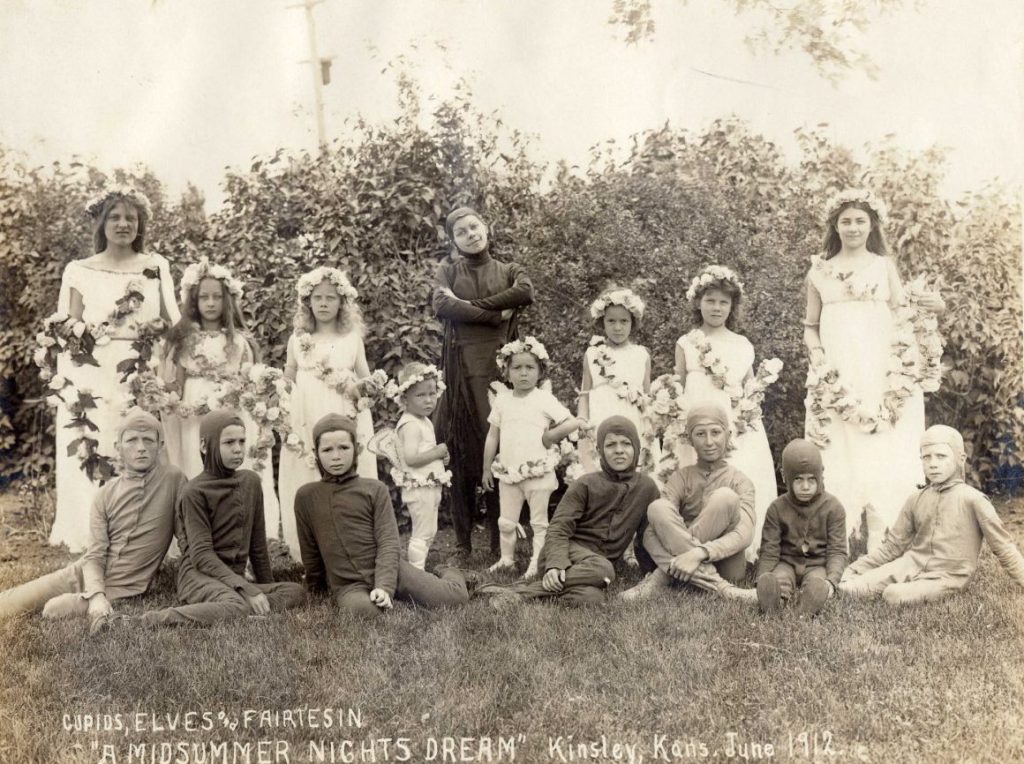
*The images above are used with permission from the Kinsley Public Library and the Edwards County Historical Society. Others are from the Wolfgang Collection.
** Charlie Edwards plays a major role in my book, Hidden History of Kinsley (History Press, 2025), co-written with Joan Weaver.
Case Study: Fairies in the Short Grass – Posts
2 – Charlie Edwards: The Man Behind Kinsley’s Shakespeare Festival
3 – 100 Years Ago Today, An Era Ended in Kinsley, KS
4 – Gilmor Brown: From North Dakota to a Shakespearean Impresario
5 – “Sixty-Below Zero:” Gilmor Brown’s 1907 Rural Canadian Shakespeare Tour
6 – Gilmor Brown’s Historic 1908 Kinsley, KS Performance
7 – A Bit of Woods Especially for a Theatre
Prologue: Kinsley’s Early Years
9 – As If By Magic: Eugene Edwards Establishes His Empire
10 – Building Kinsley, Reading Shakespeare
11 – Reinvention: The Sellers Family Moves West
12 – Louie Lord: A Star Visits Kinsley
13 – Fire in the Great American Desert
14 – Kinsley’s First Celebrity Wedding
15 – Dame Fortuna

