

1872-1878
The story of one of America’s earliest and largest Shakespeare festivals began as a community arts project on the Kansas frontier in Edwards County, Kansas, named after a Gilded Age capitalist.
Today’s post is the beginning of this story, and the beginning of a cultural history. It starts with Eugene Edwards, Charlie Edwards‘s father, his arrival in Kansas, and how he built a local business empire.
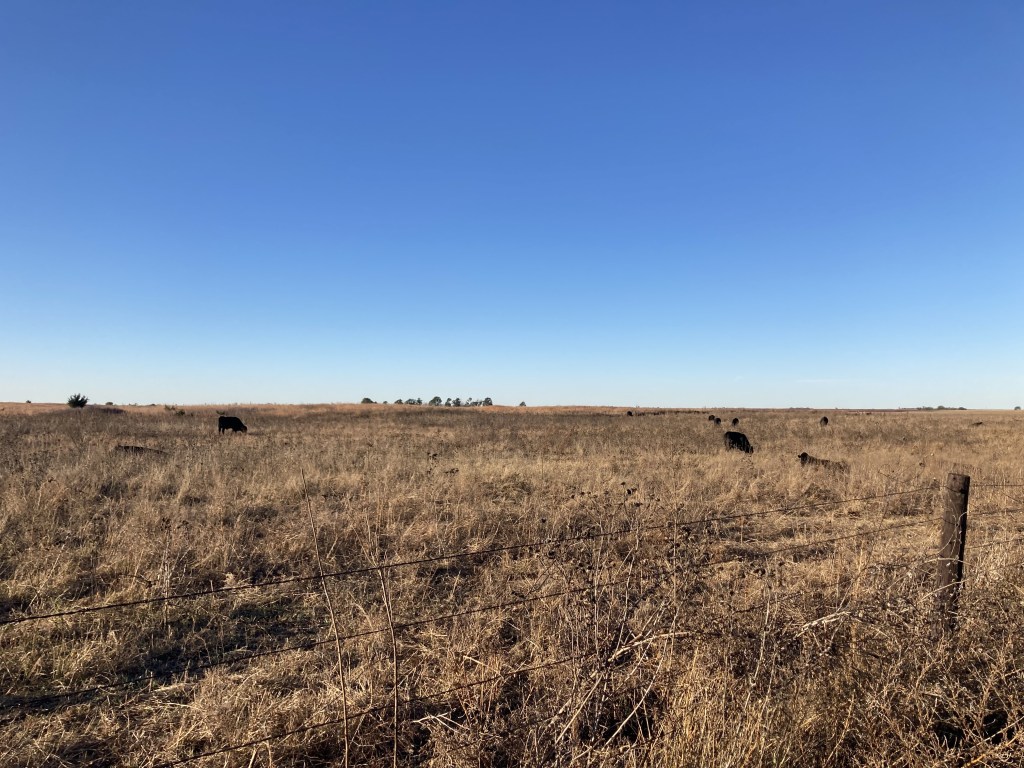
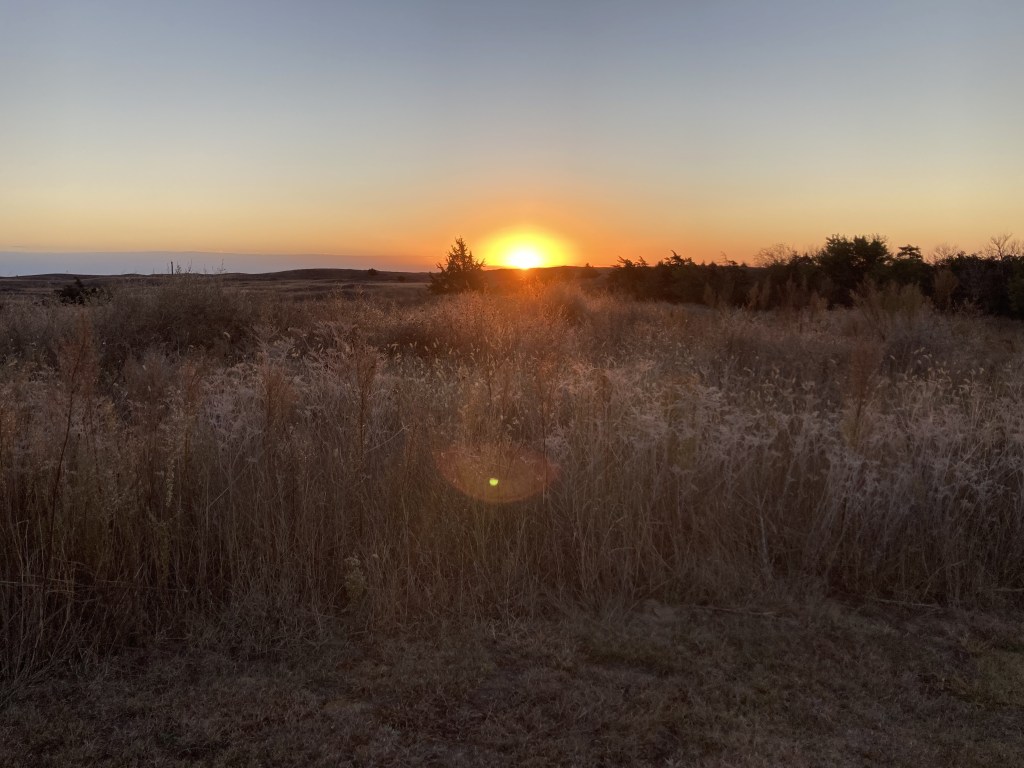
The setting: The mesmerizing vastness of the short grass prairie of western Kansas immediately seizes the imagination. Here, a patchwork of greens and yellows collides with hills of sand, and a mystique pervades these land formations. The wind soars above; the grass seems to ebb and flow like the ocean.
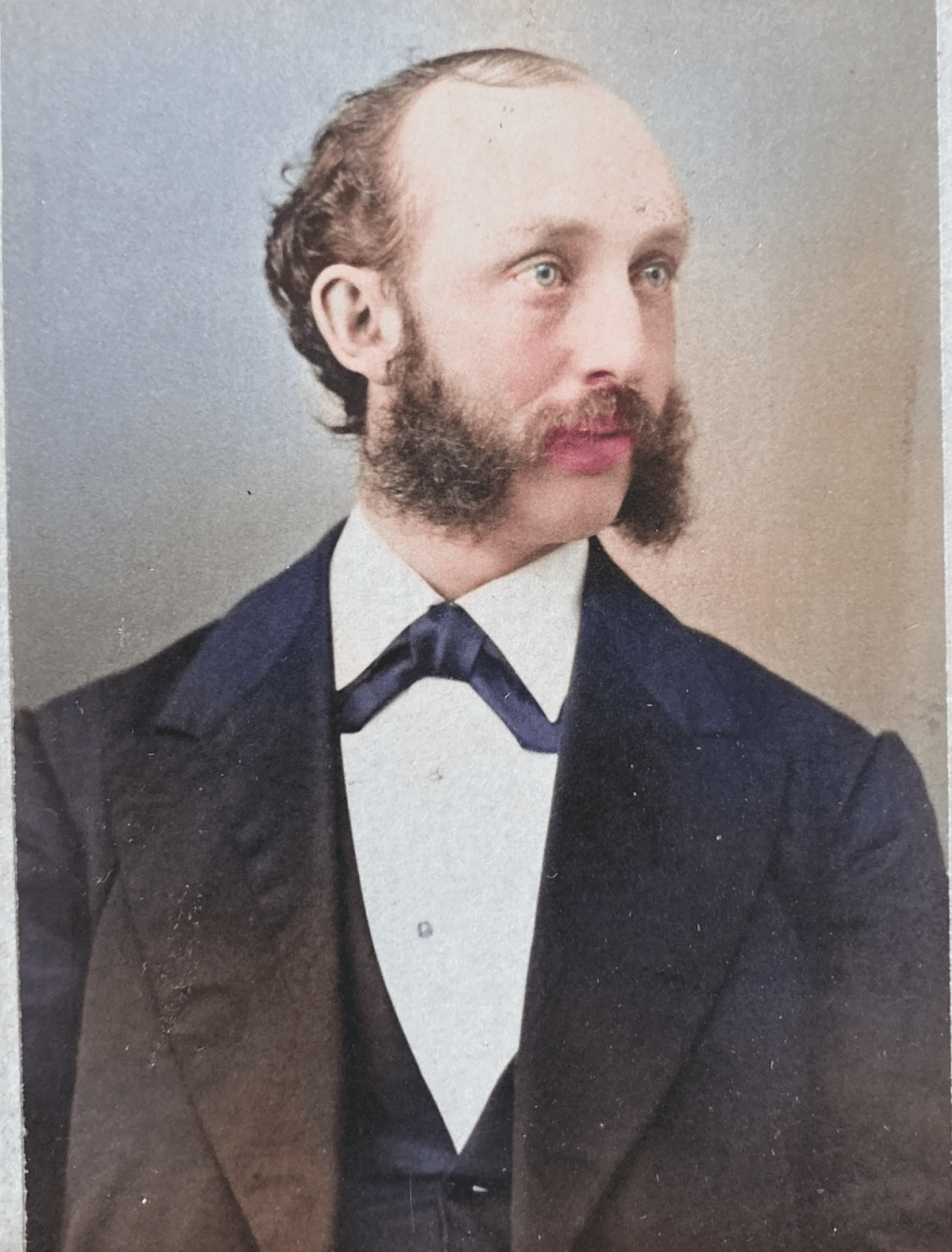
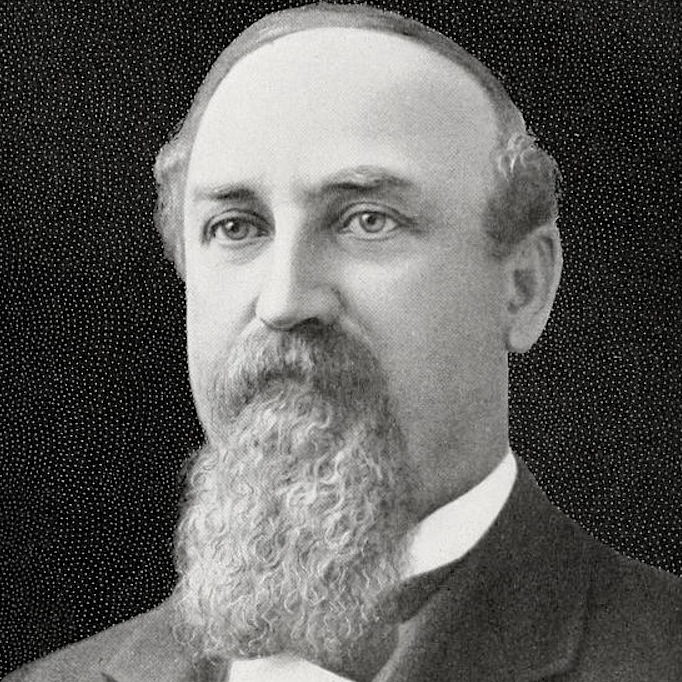
The cultural moment: This same breeze beckoned prospectors to an untold fortune. This scene, in the spring of 1875, lured thirty-four-year-old merchant Rufus Eugene Edwards (photographed here) from Oneonta, New York, to the expanse. It was a time of speculation, and he smelled profit fleeting through the prairie breezes. Eugene, as he liked to be called, fashioned himself too shrewd a businessman to be ensnared in false hopes, so the merchant wrestled with apprehensions spurred by a recent grasshopper plague of biblical proportions and the alarms of critics who referred to this region as the “Great American Desert.”
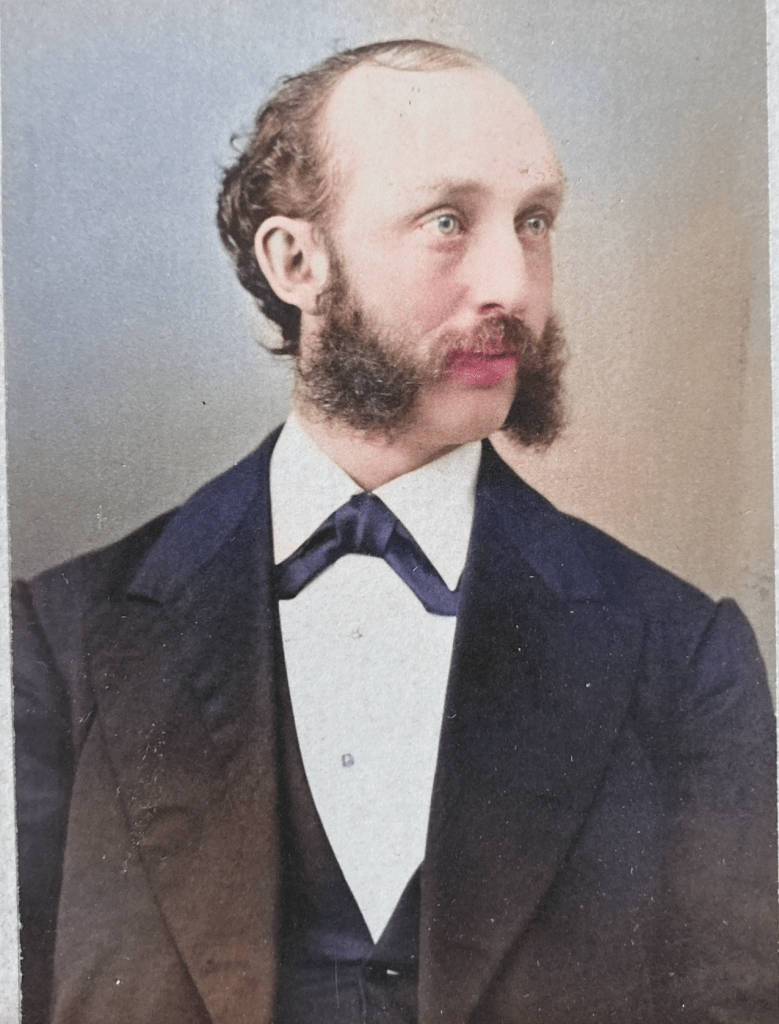
On the other hand, he also undoubtedly heard promising assessments of a region, comparing it to the Garden of Eden, a utopia primed for development. While his business plans were uncertain as these contradictory hyperboles, like many of his contemporaries, the whiskered, bright-eyed salesmen knew he had arrived at a time of pronounced transformation.
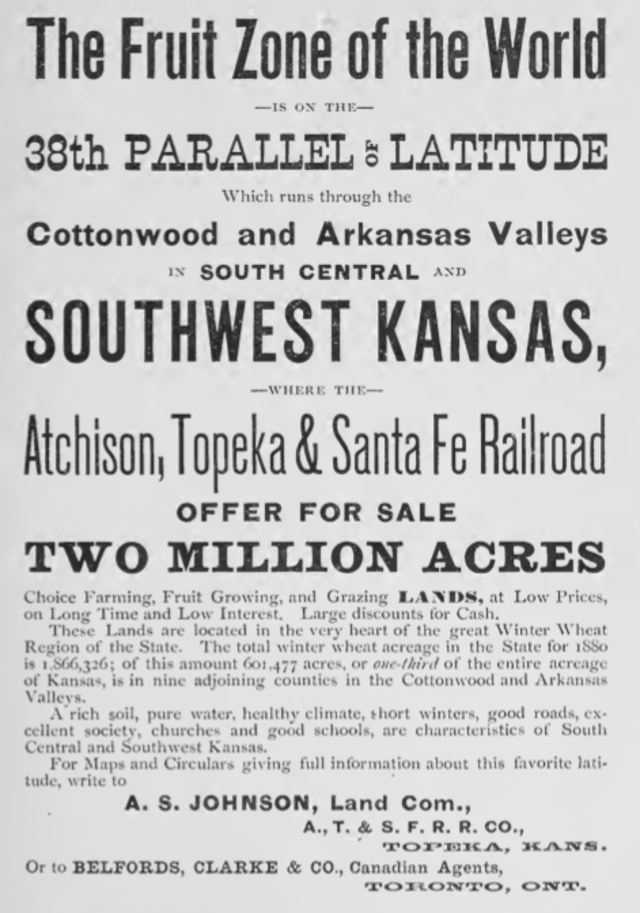
The history: For centuries, the magnificent Kansas landscape experienced a gradual ecological and cultural transformation. Conquistador Francisco Vasquez de Coronado commanded an expedition to present-day Kansas, where he encountered the thriving Quivirans in 1541.[i] Tempted by this discovery, Spain asserted its claim on the territory. Imperialistic France and Spain traded rights to the land back and forth from 1699 until the United States acquired it in 1803.
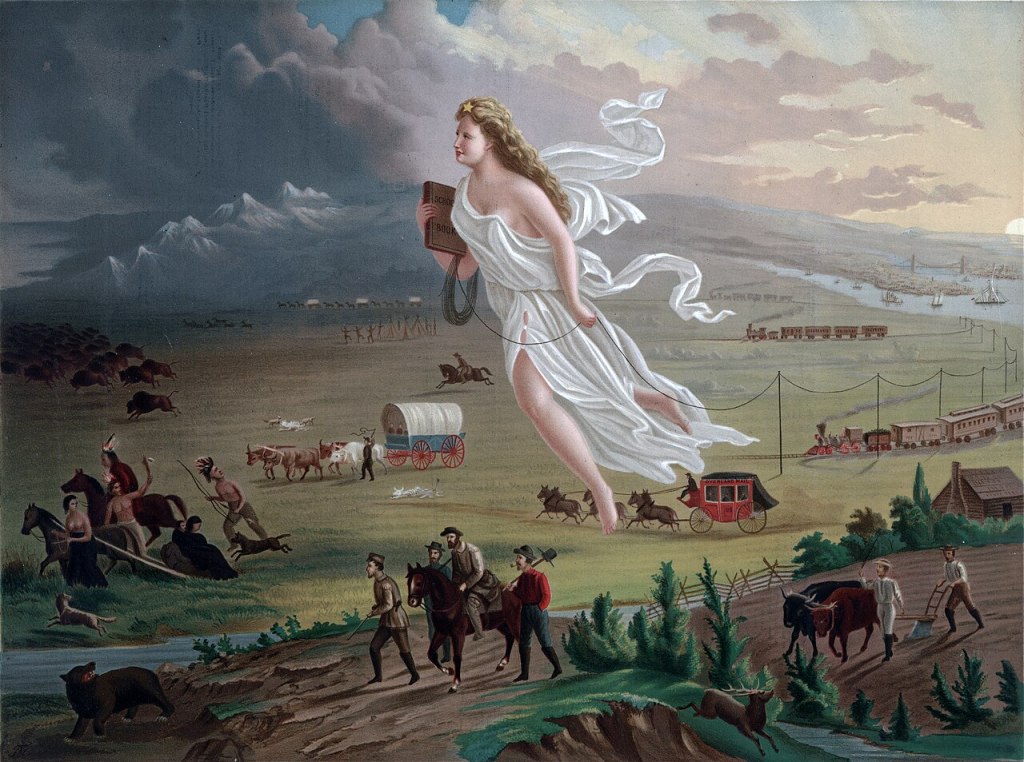
Still, Native Americans continued to steward their ancestral territories throughout the struggle between the colonial empires. It was not until the Manifest Destiny craze of the 1840s, when Imperial America began its overpowering march westward, that the indigenous peoples lost significant lands.
In June 1848, the prairie just miles from where Eugene stood, envisioning his prosperous future, was the site of the Battle of Coon Creek. This fatal clash of a combined Native American force of Comanches and Osages with American troops from the Santa Fe Battalion left at least twenty-five indigenous peoples dead.[ii] Nearly two decades after this horror, native forces retaliated, brutally massacring sixty-one members of an American government wagon train.[iii] Only the coming widespread ecological disruption rivaled this cultural turmoil as the prairies themselves would be forever altered.
Despite this tragic recent history, territorial clashes and environmental disruptions were not significant concerns for Eugene.
Such deadly episodes with indigenous tribes had become less frequent. Also, at the time, he had no plans to engage in the remnants of the buffalo craze. Whether or not his real estate speculations remained profitable concerned him the utmost.
Before Eugene even set foot on the soil, he had an advantage. His younger brother, William Chalmers Edwards (photo, left), was an enthusiastic and well-established lumberman who had already answered fortune’s invitation. He arrived forty miles northeast of Dodge City in the Arkansas River Valley shortly after the railroad’s completion in 1872 and began making investments. With his Hutchinson-based lumber business that he established that same year, booming in the towns of Cottonwood Falls and Peace, William Chalmers laid the foundation for the first brick building in this newly forming town.[iv] The residents named it Petersburg.
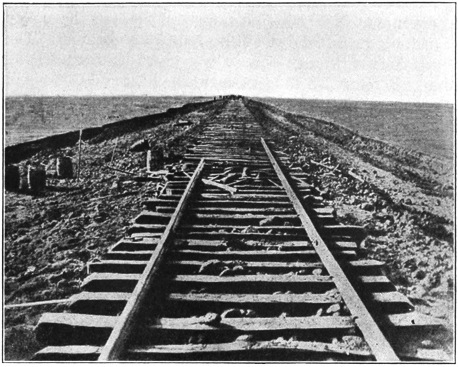
Meanwhile, individuals recruited by the New England Homestead and Colonization Bureau slowly continued to develop the new settlement. In the two years after its inception, the town had a population of approximately six hundred, with many of its vital businesses owned by William Chalmers Edwards.[v]
When Boston industrialist Edward W Kinsley, a brother of an influential townswoman, invested more wealth into the town’s buildings, local leaders chose to rename the town in his honor. Money and landholdings benefitted William Chalmers Edwards, too.
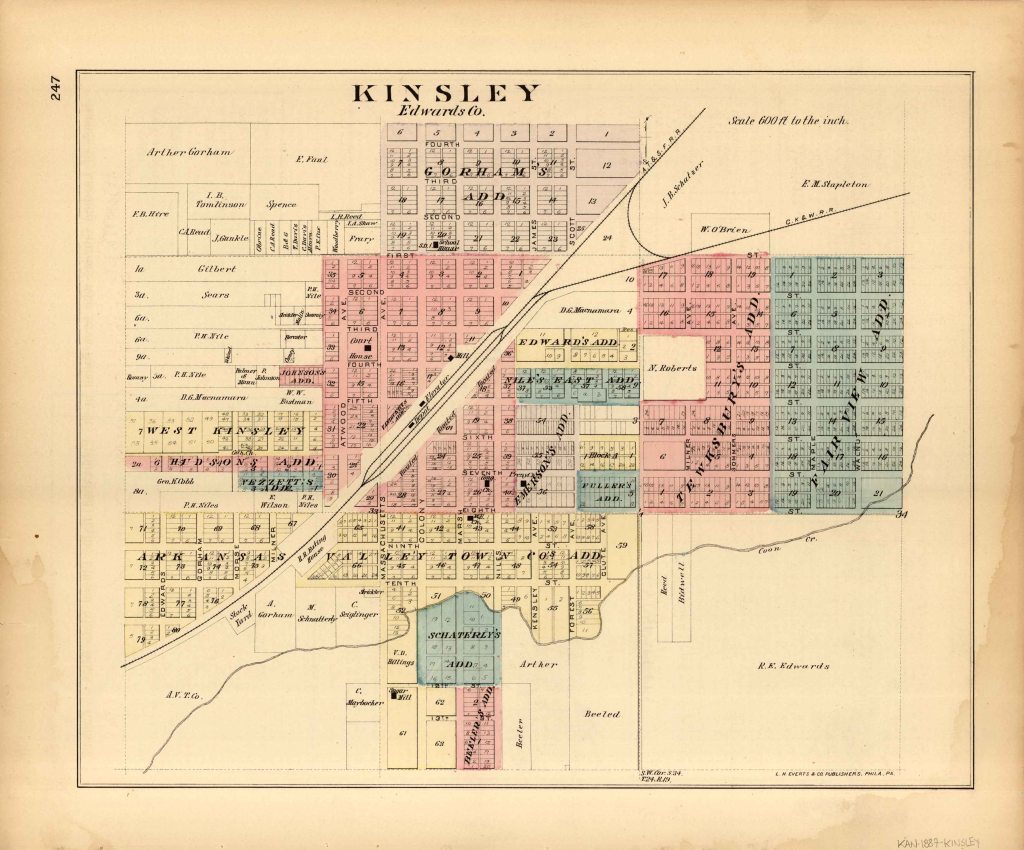
Due to owning so much land and other economic interests, the local supervisors bestowed upon the county Edwards’s name.[vi] In August 1874, the board of commissioners organized Edwards County, Kansas, with its governmental seat in Kinsley.[vii]
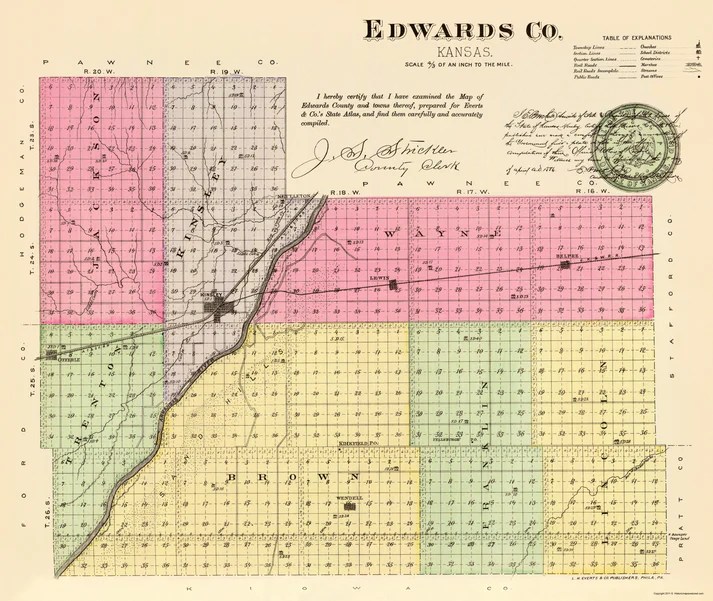
Still, times were uncertain, and Eugene’s ultimate choice to relocate from New York to Kansas was very risky. After this 1875 prospecting tour and assessment of the jointly owned property with his brother, the bachelor decided to gamble and relocate to Kinsley to engage in speculations, as he and countless others did during this time.[viii] Once there, he turned his initial investments into more capital by acquiring additional real estate and establishing various businesses. In spring 1876, Eugene and William Chalmers opened a general merchandising store called the Edwards Brothers on the “brick block.”[ix] William Chalmers Edwards put down roots in Hutchinson to manage the brothers’ lumber holdings in central Kansas, while Eugene headed their affairs in Kinsley.
Under Eugene’s lead, other businesses, including a real estate company, also formed with the Edwards name.
Not long after, his fellow townspeople asked him to form a bank. Initially resistant to the idea, possibly due to a brief stint as a moneylender in Hutchinson a few months prior, he stated that he did not plan to stay in Kansas. Eugene tried to appease the requests during a visit by a zealous land agent and photographer, creating a prospectus to promote settling the towns along the Santa Fe railroad line. He jokingly grabbed a charred piece of wood from outside his store, scribbled “Edwards County Bank” on the wood, and hung it on the door to his office. The photographer snapped an image.
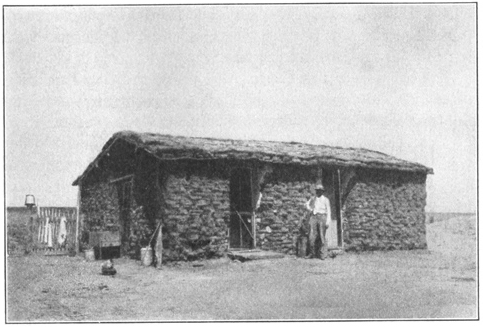
The next day, as homestead farmers came into town seeking financing for the developing farming industry, Eugene soon discovered he was also to be a banker indeed. As the influx of homesteading customers continued, a man arrived shortly thereafter and announced he would deposit one thousand dollars.[x] This was a sizeable amount of money for the time. With the formation of the Edwards County Bank, Eugene added another cornerstone to his growing business empire.
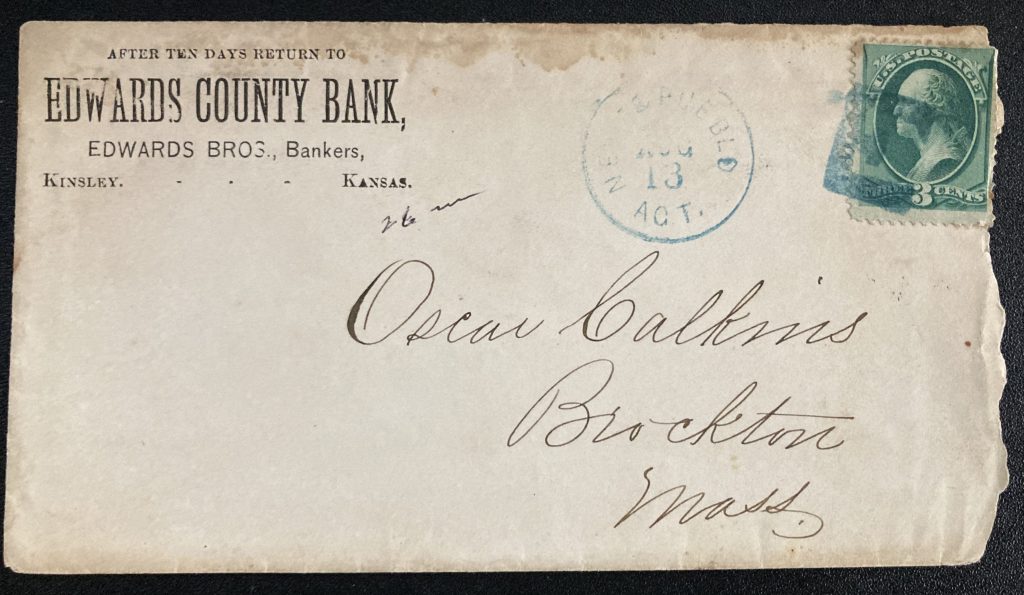
Eugene was not interested in supporting the arts in this frontier town. He came to the west to make money, and opening a performance hall, while it would attract attention and visitors, it would not directly benefit him. However, he was perfectly willing to provide a loan for those taking risks on such ventures. For example, Samuel Calkins would establish one of Kinsley’s first performance spaces, and he couldn’t have done so without the artifact below, capturing a moment in time between the Edwards County Bank.
The year 1877 brought further growth for Eugene, who continued to manage his diverse business activities without much direct assistance from his brother.
Nevertheless, the absentee brother, William Chalmers Edwards, visited from Hutchinson on the twenty-first of June, and the local paper, the Edwards County Leader, noted that:
“inasmuch as Edwards county is named after him, he ought to come oftener and stay longer.”
Despite his absence, both of the Edwards Brothers maintained a record as reasonable and honorable businessmen, as the paper reinforced:
“He has many friends here, who would like a frequent shake from his hand.”[xi]
This reputation would continue to pay off financially, as Eugene and his local business partner, Taylor Flick, owned “one hundred fifty of the best lots in Kinsley” and were ready to sell by the end of summer.[xii]
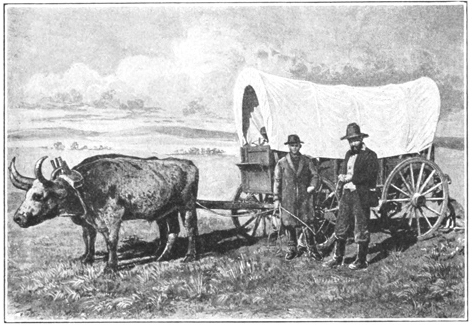
Indeed, the people of Kinsley were doing their best to market the town’s success. Since Kinsley was yet to be known for anything, its days as an arts magnet were still a few years away, promoters seized on the propaganda widely shared about western Kansas.
An editorial reprinted in the County Leader from the Leavenworth Times returned to this propaganda from years earlier:
“There can’t be any doubt about the fact that this portion of Kansas was the original Garden of Eden…”
The author went further, sensationally asserting that the mystic landscape had something to do with the town’s existence:
“One of the wonders of Kansas, a town which has spring up as if by magic, and which acknowledges no competition from its rivals.”[xiii]
However, this rosy picture of growth did not mean an easy life for Eugene’s customers. Farmers were constantly at the mercy of the unpredictable cycles of the Kansas weather, and also susceptible to the ups and downs of each crop market and the prices charged by the railroads to transport goods in and out of town.
The Edwards brothers reminded their customers of reality in a January 1878 newspaper advertisement:
“Edwards Bros. pay more money to the railroad company than any two lumber firms in the valley. That tells who handles the lumber.”[xiv]
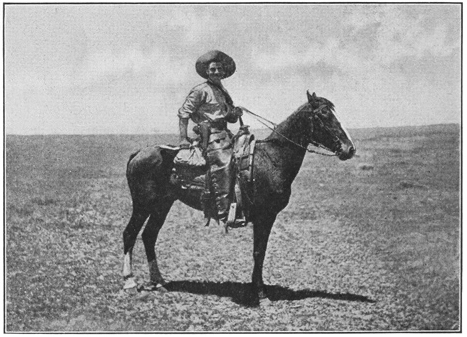
Days later, a dramatic train robbery in town reinforced the unpredictable life in America’s frontier towns. Complete with accounts of nearly a dozen villainous horsemen pursuing a westward-bound train that had previously escaped the thieves at the Kinsley station, the story vividly captures the essence of the train-robbery paradigm. (You can learn all about the Kinsley train robbery in my book, The Hidden History of Kinsley.)
Likewise, this time and place produced other evocative imagery, like mania-driven hunters standing atop a mountain five times their height, composed entirely of buffalo skulls.
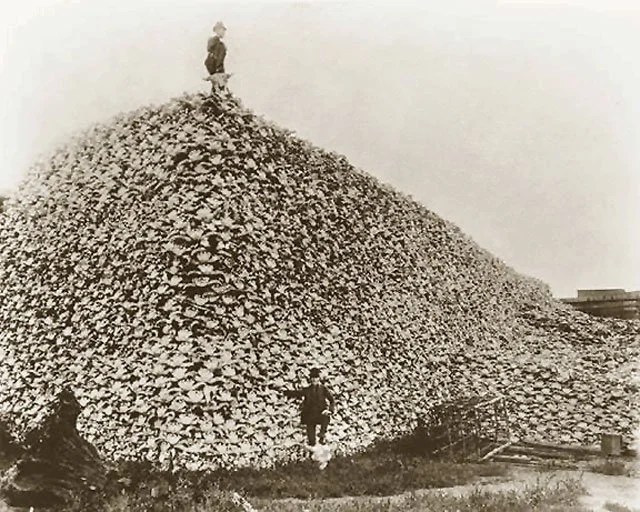
Between 1870 and 1874, over two thousand hunters rabidly pursued the buffalo for their hides in the region around Kinsley.[xv] By the time the town of Kinsley came into existence, the overwhelming majority of buffalo had been exterminated. Nevertheless, Eugene learned there was money in dead buffalo, still, in 1878: the bone trade.
Eugene’s involvement in this business caused a moment of poor public relations, something the shrewd and fastidious merchant tended to avoid. The Kinsley Republican covered a public town meeting in great detail under the bold typeface headline “Buffalo Bones.”
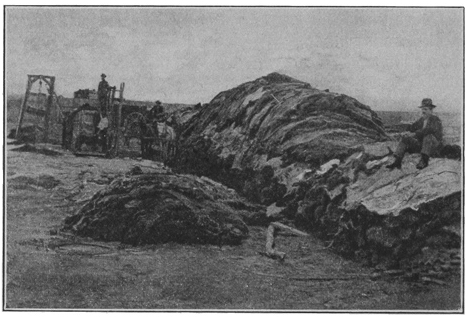
Buffalo Bones
In the “Buffalo Bones” article, residents complained that the stench of Eugene’s massive and growing piles of buffalo bones, with nearby “stink holes” and other stagnant water, caused and continued to spread disease throughout town. Witnesses attested to illness within their families, and a local doctor testified that the situation was “damaging” to the community’s health. One man announced that they all were suffering from “bone fever” and that the town should incorporate to enforce sanitation with a local ordinance.[xvi]
Eugene opposed incorporating the town, a position he would later rescind, and barely recognize at the end of his life. Ostensibly, he must have thought at the time that the associated regulations would only encumber his businesses’ unstoppable growth. He declared:
“No benefits could possible result from such a course–nothing but expense.”
Eugene informed the crowd that he amassed the bones by the centrally located railroad tracks because they needed to be “where he could see them.” He took this opportunity to remind the citizens:
“Heaps of bones were not ornamental, but they were things to bring money.”
Furthermore, he continued:
“Buffalo bones are the bread of Kansas.”
Attempting to keep his public profile positive, Eugene then waxed diplomatic. He offered to appoint a night watchman to patrol the boneyard, and then he proposed to relocate the bones to a less conspicuous place. Nonetheless, he clarified his sentiments and his unmistakable role as a Gilded Age monopolist:
“I came here to do business and make money. Lots of things don’t look pretty, but beautifying a town was unprofitable.”
A critic countered, “Families are sick from the smell of the bones.”
To which Eugene responded,
“If health suffers, I will remove them.” [xvii]
Days later, the capitalist moved his buffalo bone hoard. While such a distinct image of America’s “Wild West” seems to clash with a developing opulence elsewhere in the country, trends indicated that the West would be gilded soon enough. Before long, buffalo bones would be a problem of the past.
Next week, we’ll explore how a shrewd capitalist like Eugene felt about the arts. After all, this is Community Arts Uncovered, and the arts should be center stage, but before we can get there, we also must explore cultural and economic conditions that made it all possible!
Join us next week to see how Eugene’s businesses continued to develop and how Shakespeare would play a role in their growth!
Special thanks to the Edwards County Historical Society!
[i] https://www.kshs.org/kansapedia/francisco-vasquez-de-coronado/17160
[ii] Oft Told Tales, 14
[iii] Oft Told Tales, 18
[iv] Chase County Leader, 29 Mar 1872; “Rufus Eugene Edwards,” KS Biographic Dictionary, 2472-2474
[v] Oft Told tales, 39, 41
[vi] The Hutchinson New, 25 Mar 1874
[vii] Edwards County Leader, 29 Nov 1877
[viii] https://www.ancestry.com/imageviewer/collections/7709/images/BiogDict-KS-1879-0454?pId=454
[ix] Oft Told Tales, 59-61
[x] Ibid.
[xi] Edwards County Leader, 21 Jun 1877
[xii] Edwards County Leader, 16 Aug 1877
[xiii] Edwards County Leader, 29 Nov 1877
[xiv] Edwards County Leader, 24 Jan 1878
[xv] Kansas: A bicentennial history, 106-107
[xvi] 14 Sep 1878,
[xvii] Ibid.


Leave a Reply