

1878-1879
How did one of America’s newest and most remote imagine becoming the country’s next great metropolis?
They had to become a destination for entertainment. So, they needed to secure the biggest theatrical stars touring the West.
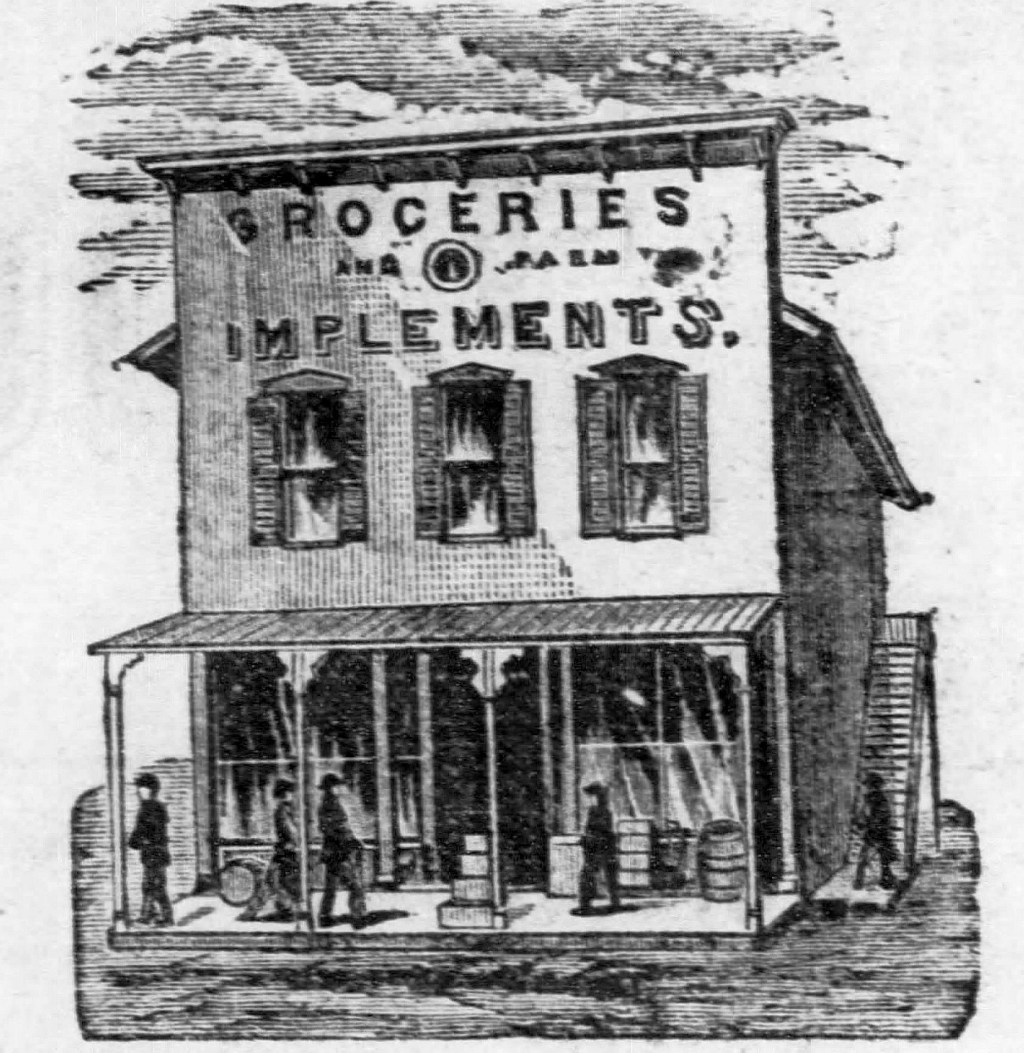
However, this was a difficult proposition for Kinsley’s earliest residents, as few touring entertainers would get off the train in Kinsley with the idea of making a profit. Yet, in January of ’78, Edwin DePuy and William Frater appeared in Kinsley with an ambitious business plan to improve the town’s lack of public meeting spaces and opportunities for performers. Soon, the duo began construction on one of the most significant buildings in the Arkansas River Valley. The two-story building housed agricultural implements for sale on the first floor. Upstairs, DePuy and Frater created something Kinsley had been missing, a place where the entire community could gather. Church services, elections, dances, lectures, concerts, and theatrical performances would all unfold beneath the same roof.[i]
Within two months of their arrival, around one hundred Kinsley residents met for a dedication ceremony and celebration for the new business, dubbed the “Gem of the Valley” or simply Gem Hall.
Judge MacArthur, who dedicated the building, announced to a cheering crowd that such a building “speaks volumes for the enterprise of our town.”[ii] Touted by passers-by as the “best ventilated hall in the valley,” this well-liked, popular building functioned as a public meeting house for politics (including caucusing, voting, and temperance events), church (different denominations met at different times), and social gatherings such as dances, balls, and club meetings.[iii]
For Lizzie and her fellow transplants who were accustomed to the vibrant social and entertainment scene of a metropolis like Philadelphia, Gem Hall was simply a useful public building. It represented something far more personal. The hall promised that life on the prairie might still include music, theatre, conversation, and evenings spent among friends. On the remote edges of the frontier, this feeling of connection to a distant social past-life suggested there could be a new sense of belonging.[iv]
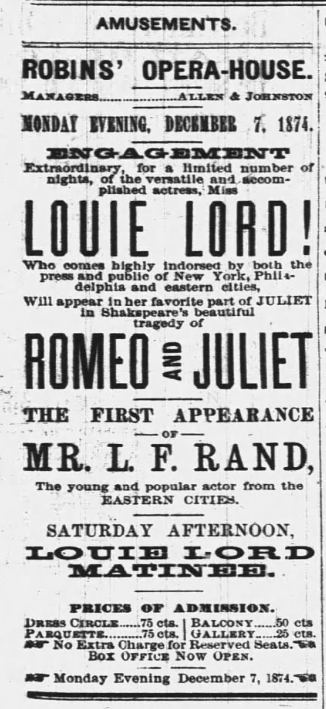
Then, out of no where, a nationally known actress stepped off the train. It was Louie Lord.
Lizzie must have been thrilled. Louie Lord was the performer on the Kansas frontier with a national reputation.[v] Lady Macbeth and Desdemona were among her repertoire along with roles that ranged from light melodrama to serious tragedy.[vi] For Kinsley residents, booking Louie Lord was a considerable achievement. Since forming a touring company with her husband in 1869, she had built a reputation that carried her from New York to New Orleans and into dozens of growing Midwestern communities. Kansas proved especially receptive to her performances, and local editors proudly informed readers that she had “few superiors on the American stage to-day.” During her week-long engagement at Gem Hall, she presented several productions, closing with Mark Twain’s comedy Lemons. On more than one evening, every available seat was filled.[vii]
For one remarkable week in 1878, a frontier town that was only beginning to establish its cultural identity welcomed one of the best-known touring actresses in Kansas. The crowded audiences at Gem Hall reinforced to the growing community that they were doing much more than surviving; they were beginning to grow. The town had officially developed an appetite for the theatre.
Yet, it would be some time before Kinsley secured a star the likes of Louie Lord again.
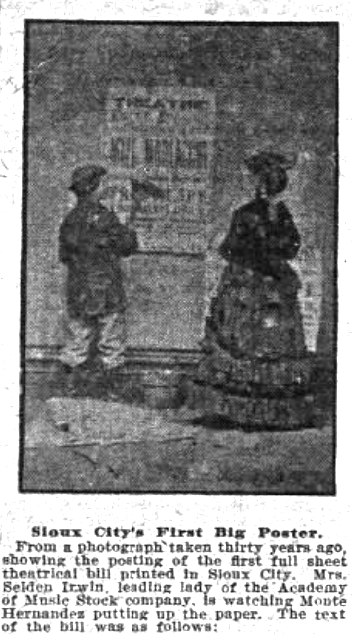
Instead, in August, Gem Hall’s proprietors booked the Hernandez Parlor Comedy Company. The group, led by twenty-six-year-old theatrical wanderer Montie Hernandez, announced that their entertainment would be a popular vaudeville act. This bill included “songs, dances, farces, etc…” It guaranteed some local attendance, especially since, as the Edwards County Leader reminded locals, this “kind of entertainment [sic] does not often visit Kinsley.”[viii] Despite growing up in the touring stock company world as a member of a theatrical family, Hernandez’s choice to venture out and manage his own company did not meet with immediate success in Kansas.[ix]
Montie Hernandez’s specialty in low comedy parts failed to resonate with audiences that enjoyed Louie Lord’s Shakespearean and melodramatic prowess. The Kinsley Graphic leveraged the opportunity to take a jab, a common occurrence for rival newspapers, at the Leader’s “kind of entertainment” that rarely visits Kinsley: “and we confidently hope visits from such said may be even more seldom.”[x] Local newspapers from towns along the railroad that the Hernandez Company visited corroborated this criticism and excoriated the performance:
The “Hernandez Comedy Company” which gave an exhibition of themselves at the school house last Monday evening was about the “snidest” of “snide” shows that ever visited our city. Their poor rendition of stale jokes was received with hisses and shouts of derision by the audience, and all felt that an imposition had been played upon them.[xi]
For residents like Lizzie, Louie Lord’s engagement offered a fleeting glimpse of the cultural life she had left behind in Philadelphia. Once the company moved on, the feeling of reconnection quickly faded. Kinsley rejected the rough, saloon entertainment popular in nearby Dodge City, but quality theatrical companies visited only infrequently. Shakespeare could be found in parlors and on bookshelves across town, yet the stages of the prairie were still waiting for someone who could bring those plays to life.
Despite the lack of quality touring theatricals, Gem Hall’s public space accommodated various culturally significant events. For example, the community gathered for a Christmas celebration that featured seasonal merriment and multiple decorated trees.[xii] This morale-boosting event helped to set the tone for the upcoming social season. A month before this holiday celebration, Lizzie prepared for an event “made up of the elite, the beauty, and the fashion” of Kinsley, which had been a local “absorbing topic for sometime.”[xiii] She had not been to a social event of this type since she had arrived in Kansas four months earlier.
Moreover, this ball was not just a dance; this was a society event.
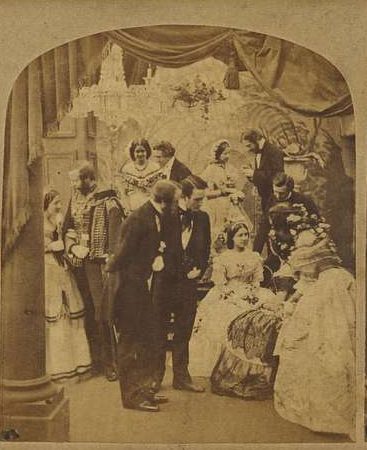
The Kinsley Republican sent a reporter to cover the event and detail the ladies’ attire, much like the society sections in prominent metropolitan newspapers. Lizzie powdered her hair, donned her dotted silk dress, finished the ensemble with a cream-colored gauze overdress, and made her way to the Kinsley Hotel for dinner “excellent in every particular.”[xiv] Next, the entire group consisting of Lizzie and twenty other women dressed in their best gowns and an unspecified group of men sporting “invariable black dress suits, with white vests” sauntered to Gem Hall and danced to music provided by Wells’ orchestra. Somewhere among the gentlemen in black dress coats may have been one of Kinsley’s most eligible bachelors: Rufus Eugene Edwards. For one evening, the frontier disappeared.
That winter evening in 1879 was about more than elegant gowns and dancing. It was the beginning of a new social world taking shape on the Kansas frontier. Lizzie Sellers would soon meet the merchant whose business ambitions matched her own hopes for culture and community, and together they would become leading figures in Kinsley’s Gilded Age society. This partnership would lead to events that would shape Kinsley for a half-century to come.
Catch the next installment of Fairies in the Short Grass next week as the community prepares for Kinsley’s largest Wedding of the 19th Century.
In the meantime, for more on the remarkable artistic community that Kinsley became at the turn of the 20th century, pick up a copy of the Hidden History of Kinsley published by the History Press and written by me and local Kinsley historian Joan Weaver.
[i] The Edwards County Leader, 22 Aug 1878
[ii] The Valley Republican, 2 Mar 1878
[iii] Edwards County Leader, 6 Jun 1878
[iv] West of Wichita, p. 68-69
[v] Kansas Opera Houses Actors and Community Events, 48-49; The New Orleans Bulletin, 14 Dec 1875; The New York Times, 1 Jun 1874.
[vi] Kansas Opera Houses Actors and Community Events, 49; The New Orleans Bulletin, 14 Dec 1875
[vii] The Kinsley Graphic, 18 May 1878; Edwards County Leader, 9 May 1879, 16 May 1879
[viii] The Edwards County Leader, 22 Aug 1878
[ix] Sioux City Journal, 4 Aug 1901
[x] The Kinsley Graphic, 24 Aug 1878
[xi] Arkansas Valley Democrat, 31 Aug 1878
[xii] The Kinsley Republican, 20 Dec 1879
[xiii] The Kinsley Republican, 1 Feb 1879
[xiv] Ibid.


Leave a comment