

1873-1878
Long before Charlie Edwards produced Shakespeare for thousands, the plays had already become part of everyday life on the Great Plains.
Before we see how Shakespeare made his way into daily life for 19th-century Americans, we need to look at the cultural events of the 1870s. In Kinsley, Rufus Eugene Edwards and his brother expanded their business empire; meanwhile, the town itself was changing just as rapidly.
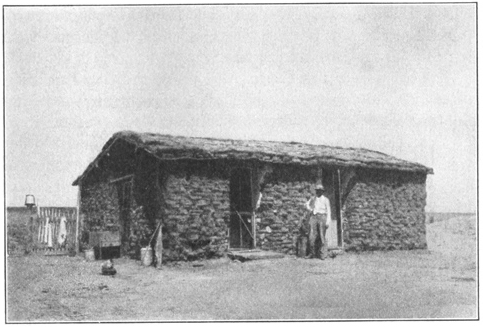
Their general store sold nearly everything a homesteader might need, from groceries and furniture to plows and harnesses. They operated a bank, dealt in real estate, and managed a lumber yard. For many settlers arriving under the Homestead Act, the Edwards brothers became one of the first stops in building a new life on the Kansas prairie. While their regionalized monopoly did not completely snuff out businesses of similar design, the Edwards dominated the local market.
Across the country, America entered a period of astonishing growth.
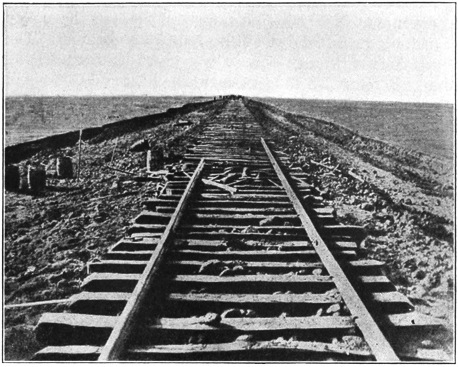
Telephones connected distant communities, railroads bound the continent together, and giant corporations radically reimagined the nation’s infrastructure. At the same time, towns like Kinsley were expanding alongside the nation’s larger cities, fueled by new settlers seeking opportunity on the Great Plains.
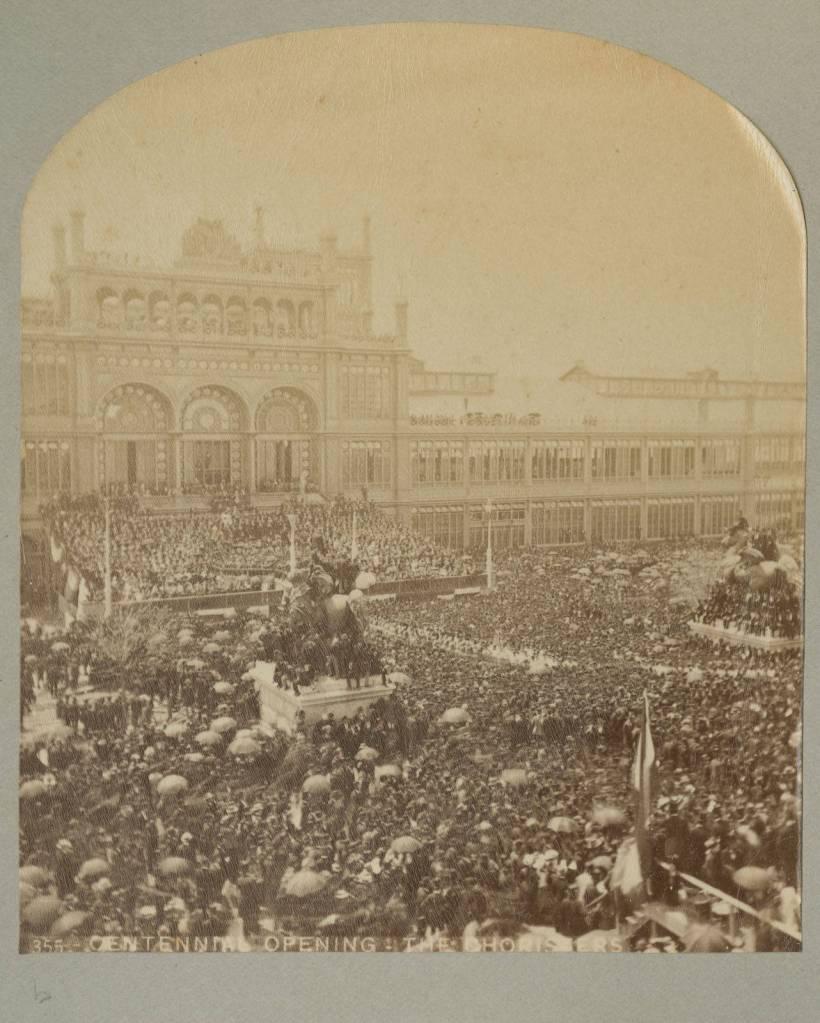
By the Fourth of July, 1876, the country celebrated its centennial in Philadelphia, with a grand celebration chaired by President Ulysses Grant. The President’s administration sought to officially end the era of Reconstruction and reunite the North and South.[i] For many families, hope began to form that a new, prosperous era was dawning. Urbanization of cities intensified just as larger-scale farming increased in remote towns like Kinsley.[ii]
Few writers captured the mood of the era better than Mark Twain.
In 1873, he and Charles Dudley Warner published The Gilded Age: A Tale of Today, a satirical novel about Americans chasing fortunes that always seemed just out of reach. The writers originally named their protagonist and most memorable character Colonel Eschol Sellers. This master-schemer of get-rich-quick plots exudes a sense of ebullient yet benign buffoonery, a likable character despite his continued business failures that leave his family in destitute poverty. Col. Sellers’ rose-colored glasses lead him to believe that “there’s millions in” every idea he conjures. When one business venture fails, the would-be capitalist quickly moves on, stating, “Speculation–my! The whole atmosphere’s full of money.”[iii] This character epitomizes America’s ambitious capitalists trying to futilely claw their way to the top through any business necessary.
For the rare few that made it to the upper class, Twain and Warner provided a convincing metaphor in the title of their novel, one that would become the era’s namesake.
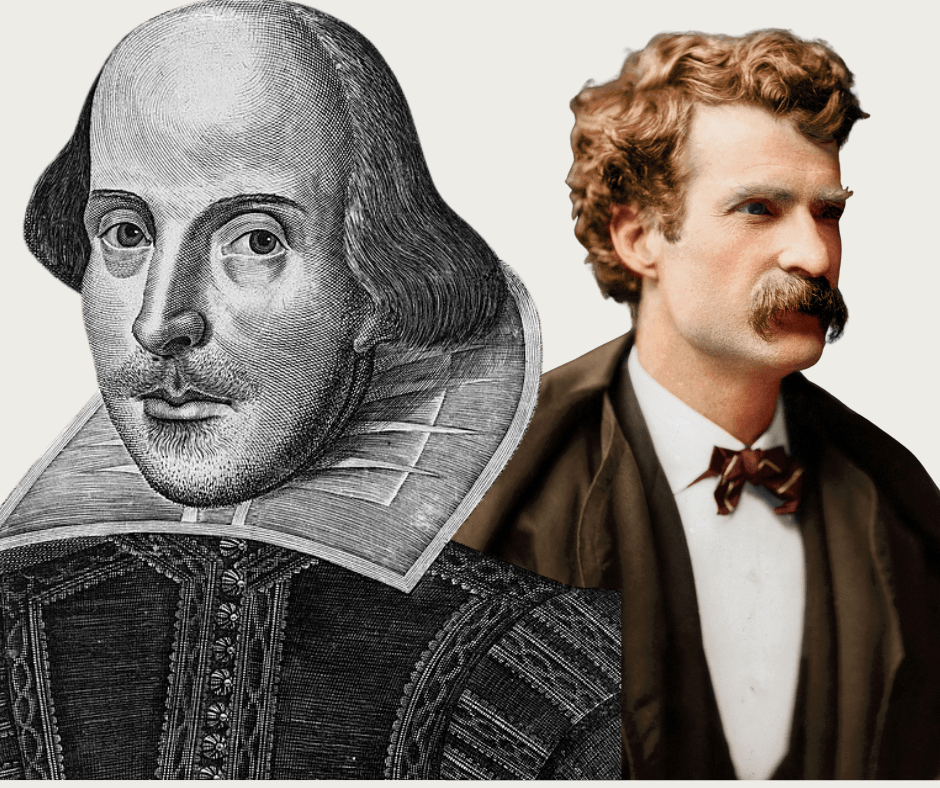
Twain sourced the word “gilded” from America’s favorite playwright, William Shakespeare, in his lesser-known history play, King John.[iv] As one of the king’s lords complains of an unnecessary second coronation for the sovereign, he condemns the behavior that would come to symbolize the late 19th-century upper class:
Therefore, to be possess’d with double pomp,
To guard a title that was rich before,
To gild refined gold, to paint the lily, […]
Is wasteful and ridiculous excess.[v]
Before Twain’s reference to Shakespeare’s “gilding refined gold,” America had already established a strong relationship with his plays as reading material, educational texts, and in performance. French diplomat and author Alexis de Tocqueville, following his travels through the United States nearly a half-century earlier, acknowledged the developing nature of the young nation: “America is perhaps in our days the civilized country in which literature is least attended to.”
Still, in this developing literary desert, Shakespeare’s popularity manifested itself time and time again across thousands of miles.
De Tocqueville famously concluded, ‘There is hardly a pioneer’s hut which does not contain a few odd volumes of Shakespeare.”[vi] One year after de Tocqueville published his observations, an educational text by William Holmes McGuffey’s The New Eclectic Reader, placed Shakespeare in a peerless educational position. Millions of children turned to his texts, reading lessons developed by a man who espoused his belief that one should “read the Bible first, Shakespeare second.”[vii]
However, unlike other literary figures whose work stayed within the realm of independent personal study, Shakespeare existed in the dynamic world of popular entertainment. These plays maintained near-ubiquity in nineteenth-century theatre from America’s largest cities to the frontiers and mining camps, whether performed by amateurs or big-name professional stars.[viii] This love of Shakespeare in his varied forms remained constant in numerous cases as pioneers populated the American West across social classes. For example, when Kansas homesteader Isaac Werner arrived at his land claim from Illinois in 1878, he brought with him in his literature collection several volumes of Shakespearean texts.[ix]
Around the same time that Werner settled into a fresh dugout with his Shakespeare texts in neighboring Stafford County, on the twenty-ninth of June 1878, Eugene Edwards picked up his local newspaper and was immediately greeted with Shakespearean content.

Editors presented him with a parodied “To Be or Not Be” speech, “Newsboy’s Version of Hamlet’s Soliloquy,” on the front page to give their readers a few laughs, whom the editors knew were well-versed in the original text.[x] The following week, another local Kinsley paper harnessed Shakespeare to make its political points about the lingering fallout from the contentious Compromise of 1877.
This turmoil resulted in the Democratic House of Representatives granting Republican Rutherford B Hayes the presidency over the popular vote winner, Republican Samuel J Tilden.
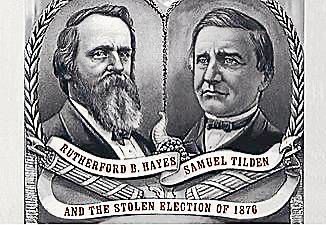
The Democratic House of Congress allowed itself to be captured by the Republican minority, on Friday last, when a resolution was passed affirming a lie. The titles of R B Hayes and Wm. A Wheeler are as invalid now as though no cowardly Congress had, with the dirty seal of its approval, stamped the genuine. Fraud sticks out just as plain as ever, and the damned spot will not out at the bidding of the Macbeth Congressional assassins of the electoral rights of the people.[xi]
These references, spurred on by Shakespeare’s potent cultural power, illuminate the playwright’s daily presence during the Gilded Age.
Moreover, the plays served as a standard set of works that one could easily reference and with which an audience would indeed identify. Thus, the era’s Shakespeare-inspired moniker is perhaps even less surprising when considering this acute familiarity with the texts.
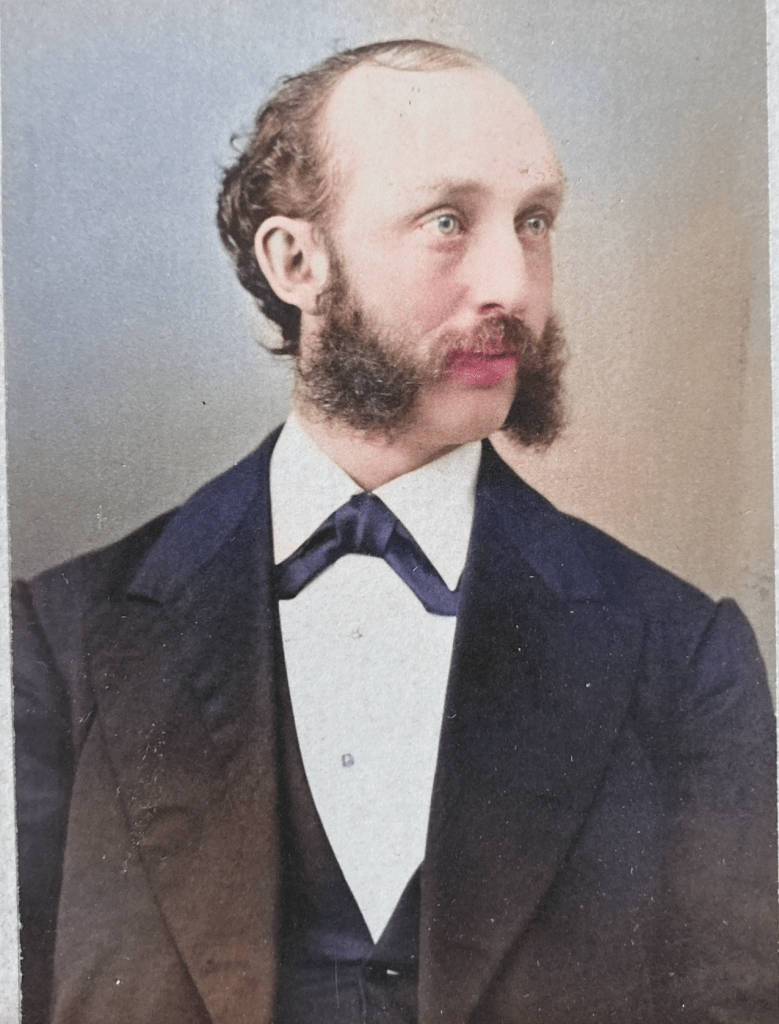
Eugene (pictured here) encountered Shakespeare as often as many Americans did: through schoolbooks, newspapers, and everyday conversation. Unlike some of his neighbors, however, he left little evidence that he sought out engagement with the plays themselves. Business consumed nearly every waking hour. Yet while Eugene built stores, banks, and lumber yards, another current was beginning to flow through Kinsley. Residents increasingly gathered around books, lectures, music, and amateur entertainments.
Before long, Eugene would meet a woman who would help transform the town’s cultural life and much more. She would become a civic leader, an arts advocate, and a mother.
Join us next week for the next installment of Fairies in the Short Grass, where Eugene meets his future wife and Charlie Edwards’s mother, Lizzie Sellers. And we also meet Charlie’s grandfather, who walked right out of a Twain novel.
[i] Gilded Age, 30
[ii] Ibid., 10
[iii] The Gilded Age: A Tale of Today, 110
[iv] Twain
[v] Shakespeare, King John.
[vi] Alexis de Tocqueville, Democracy in America, (New York, NY: Random House Publishing Group, 2000), pp. 568-69.
[vii & viii] Scheil, Katherine. She Hath Been Reading. Cornell University Press, 2012.
[ix] Fenwick, Lyn.v Prairie Bachelor. 1-2
[x] The Valley Republican, 29 Jun 1878
[xi] The Kinsley Republican, 6 Jul 1878


Leave a Reply